Vision and Mission

Our vision and mission are the starting point of our quality assurance system and strategic goals. On this page you will find the kind of faculty of medicine we aim to be, the values and principles that guide us on the way, our aims, and the competencies we want our graduates to acquire.
Full text (including all 98 sub-competencies): download the PDF (12 pages, 879 KB)
Our Vision | Our Mission |
|---|---|
To be a qualified faculty of medicine that embraces modernity and continuous renewal as guiding principles, in which ethical values are internalised and quality awareness is firmly established, and which is recognised and preferred nationally and internationally. | On the basis of legislation and ethical values, to continuously improve our standards in education and training, research and development, and healthcare; to look after the well-being of our students and staff; to strengthen interprofessional interaction and collaboration; and to provide high-quality service in a transparent and reliable way that is responsive to the needs of society, in line with the principles of social responsibility, social trustworthiness and social accountability. |
Where we want to be | What we do every day |
At a glance · from our values to our graduate outcomes | |||
|---|---|---|---|
11values and principles | 3aims: education, research, service | 8core competencies in 3 areas | 32graduate outcomes |
Our Values and Principles
Eleven values and principles guide us in education, research and healthcare:
01 · Commitment to ethical values
02 · Scientific approach and critical thinking
03 · Student-centredness
04 · Well-being and healthy living
05 · Interprofessional interaction and collaboration
06 · Quality assurance and continuous improvement
07 · Social responsibility and responsiveness
08 · Justice, equality and inclusiveness
09 · Transparency and accountability
10 · Innovation and openness to development
11 · Openness to national and international development
Our Institutional Aim
The fundamental aim of Mersin University Faculty of Medicine is to provide a contemporary education and research environment based on ethical values, transparency, accountability and continuous improvement, in order to train physicians who have the knowledge, skills and attitudes to meet the health needs of individuals and society; who are committed to professional and ethical values; who have acquired scientific thinking and research competence; who embrace the principles of evidence-based medicine; who can provide effective healthcare ranging from preventive health services to the early diagnosis, treatment, follow-up and rehabilitation of diseases; who embrace lifelong learning and continuing professional development; who are open to interprofessional collaboration; who look after the well-being of their stakeholders; and who are aware of their responsibility towards the environment and society.
Our Aims and Objectives
Our institutional aim is put into practice through three aims, in education, research, and healthcare and contribution to society; the 39 objectives linked to these aims are listed below.
1 · Education Aim
To train physicians who have the basic and clinical medical knowledge, professional skills and appropriate attitudes to meet the health needs of individuals and society; who respect patient rights and the principles of medical ethics; who have well-developed skills in effective communication and interprofessional collaboration; who can make evidence-based decisions; who give priority to preventive health services; and who embrace lifelong learning.
Undergraduate education objectives · 27 objectives: 7 knowledge, 15 skills, 5 attitude
Knowledge objectives
Describes the normal structure and functions of the human body and its organ systems.
Explains the biochemical and physiological mechanisms of the human body.
Explains the structural and functional changes that occur in the human body in disease, and describes the aetiology, pathology and clinical features of diseases.
Recognises the biopsychosocial and cultural factors that impair human health.
Describes normal and abnormal human behaviour.
Describes the mechanisms of action, adverse effects and pharmacodynamic and pharmacokinetic properties of drugs.
Understands the importance of protecting and promoting public health.
Skills objectives
Takes a detailed medical history, including the person's sociodemographic characteristics.
Performs a complete and systematic physical examination of the organs and systems of the human body.
Performs a psychiatric examination.
Manages diseases that are common in the community.
Monitors healthy individuals.
Promotes and protects health.
Screens individuals at risk at regular intervals.
Keeps proper medical records and completes periodic notifications without delay.
Works as a team member and as a team leader.
Manages diseases and patients (prevention, diagnosis, treatment, referral, consultation) with a biopsychosocial approach.
Recognises life-threatening medical emergencies and provides initial intervention.
Takes the measures needed to prevent disease and counsels individuals at risk (risk management and primary prevention).
Manages the prevention of complications of disease (secondary prevention).
Manages rehabilitation (tertiary prevention).
Communicates effectively with patients, their relatives, colleagues and other health professionals using basic communication techniques.
Attitude objectives
Is aware of ethical principles and legal responsibilities at every stage.
Follows the rules of professional conduct (deontology) in relations with colleagues and health personnel, and is aware of the importance of teamwork.
Is aware of the importance of patient confidentiality.
Shows sensitivity to personal and cultural characteristics in interactions with individuals and society.
Understands and embraces the importance of lifelong and self-directed learning.
2 · Research Aim
To develop a culture of scientific thinking, research and inquiry so that students gain competence in research methods, scientific ethics, evidence-based medicine and critical appraisal, and to contribute to scientific output and to advances in health at national and international level through high-quality scientific research conducted in line with ethical principles.
Research objectives · 6 objectives
Recognises that there are opportunities to take part in scientific congresses.
Is aware of the importance of contributing to scientific presentations.
Acquires the skill of critically appraising articles using evidence-based medicine.
Learns about the process of preparing a scientific study by taking part in research activities.
Acquires skills in preparing scientific studies.
Is aware of opportunities to attend presentations of projects supported by national and international project centres.
3 · Healthcare and Contribution to Society Aim
By integrating education and healthcare processes, to adopt an approach to service that safeguards the rights, safety and satisfaction of patients and their relatives; supports effective communication and interprofessional collaboration among healthcare workers; is responsive to the health needs of society; and aims to improve the quality of healthcare in line with national and international quality standards and evidence-based practice, to protect and improve public health, and to continuously improve service processes through stakeholder feedback and quality indicators.
Service objectives · 6 objectives
Understands the importance of accreditation and quality bodies in meeting national and international quality standards, and contributes actively to these processes directly or through representatives.
Understands the positive effect on learning of supporting the management of outpatients and inpatients, and provides this support.
Understands that hospital duty shifts are part of training and works in a team spirit with seniors, juniors and peers.
Fulfils the tasks assigned in primary care services within the limits of their authority and responsibilities.
Informs and advises patients and their relatives, taking physical, psychological, social and cultural factors into account.
Understands the components of the electronic health record system.
Core Competencies of Our Graduates
The core competencies that our students are expected to acquire by graduation, in line with our institutional aim, are aligned with the National Core Curriculum for Undergraduate Medical Education (UÇEP 2020): 3 competency areas, 8 competencies and 32 outcomes.
The sub-competencies linked to each outcome (98 in total) are listed in the full-text PDF.
Competency area 1 · Professional Practice
Competency 1 · Health Care Provider | |
|---|---|
1.1 | Integrates the knowledge, skills and attitudes acquired from the basic and clinical medical sciences, the behavioural sciences and the social sciences, and uses them in providing healthcare. |
1.2 | Shows a biopsychosocial approach to patient management that takes the individual's sociodemographic and sociocultural background into account, without discrimination on the basis of language, religion, race or sex. |
1.3 | Gives priority to protecting and promoting the health of individuals and the community when providing healthcare. |
1.4 | Carries out the work needed to maintain and improve health, taking into account the individual, community, social and environmental factors that affect it. |
1.5 | Provides health education to healthy and sick individuals, their relatives and other health professionals, recognising the characteristics, needs and expectations of the target group. |
1.6 | Shows a safe, rational and effective approach in prevention, diagnosis, treatment, follow-up and rehabilitation when providing healthcare. |
1.7 | Performs invasive and/or non-invasive procedures safely and effectively for the patient in diagnosis, treatment, follow-up and rehabilitation. |
1.8 | Provides healthcare with due regard for the health and safety of patients and staff. |
1.9 | When providing healthcare, takes into account changes in the physical and socioeconomic environment that affect health at regional and global level, as well as changes in the individual characteristics and behaviours of the people who seek care. |
Competency area 2 · Professional Values and Approaches
Competency 2.1 · Committed to Professional Ethics and Principles | |
|---|---|
2.1.1 | Takes good medical practice into account in carrying out the profession. |
2.1.2 | Fulfils duties and obligations within the framework of the ethical principles, rights and legal responsibilities that the profession requires. |
2.1.3 | Shows a determined commitment to providing high-quality healthcare, taking the patient's integrity into account. |
2.1.4 | Evaluates their performance in professional practice, taking their emotions and cognitive characteristics into account. |
Competency 2.2 · Health Advocate | |
|---|---|
2.2.1 | Advocates the improvement of healthcare delivery to protect and promote community health, taking the concepts of social accountability and social responsibility into account. |
2.2.2 | Can plan and conduct service delivery, education and counselling processes related to individual and community health in collaboration with all stakeholders, in order to protect and promote health. |
2.2.3 | Evaluates the effects of health policies and practices on individual and community health indicators, and advocates improving the quality of health services. |
2.2.4 | As a physician, values protecting and promoting their own physical, mental and social health and does what is needed to achieve this. |
Competency 2.3 · Leader and Manager | |
|---|---|
2.3.1 | Sets an example and shows leadership within the healthcare team during service delivery. |
2.3.2 | Uses resources cost-effectively, for the benefit of society and in line with legislation when planning, implementing and evaluating health services in the institution they manage. |
Competency 2.4 · Team Member | |
|---|---|
2.4.1 | Communicates positively within the healthcare team and takes on different team roles when needed. |
2.4.2 | Is aware of the duties and obligations of the health professionals in the healthcare team and behaves accordingly. |
2.4.3 | Works in harmony and effectively with colleagues and other professional groups in professional practice. |
Competency 2.5 · Communicator | |
|---|---|
2.5.1 | Communicates effectively with patients, their relatives, health professionals and other professional groups, institutions and organisations. |
2.5.2 | Communicates effectively with individuals and groups who need a special approach or have different sociocultural characteristics. |
2.5.3 | Shows a patient-centred approach that involves the patient in decision-making in diagnosis, treatment, follow-up and rehabilitation. |
Competency area 3 · Professional and Personal Development
Competency 3.1 · Scientific and Analytical Thinker | |
|---|---|
3.1.1 | When necessary, plans and conducts scientific research for the population served and uses its results and/or the results of other research for the benefit of society. |
3.1.2 | Accesses current literature in their field and appraises it critically. |
3.1.3 | Applies the principles of evidence-based medicine in clinical decision-making. |
3.1.4 | Uses information technologies to make their work in healthcare, research and education more effective. |
Competency 3.2 · Lifelong Learner | |
|---|---|
3.2.1 | Manages their individual work processes and career development effectively. |
3.2.2 | Demonstrates the skills of acquiring and evaluating new knowledge, integrating it with existing knowledge, applying it to professional situations and adapting to changing conditions throughout professional life. |
3.2.3 | Selects appropriate learning resources and organises their own learning to improve the quality of the healthcare they provide. |
Documents
Vizyon, Misyon ve Temel Yetkinlikler: full text in Turkish (PDF, 12 pages, 931 KB)
Vision, Mission and Core Competencies: full text in English (PDF, 12 pages, 879 KB)
Institutional Aims and Programme Objectives 2023-2024: original document (Turkish) (previous version; scanned PDF, 58 pages, 46.3 MB; also covers phase and clerkship objectives)
Related pages
Phase Aims and Learning Objectives
Aims of Phases I-VI, committee learning objectives and clerkship objectives.
View the objectives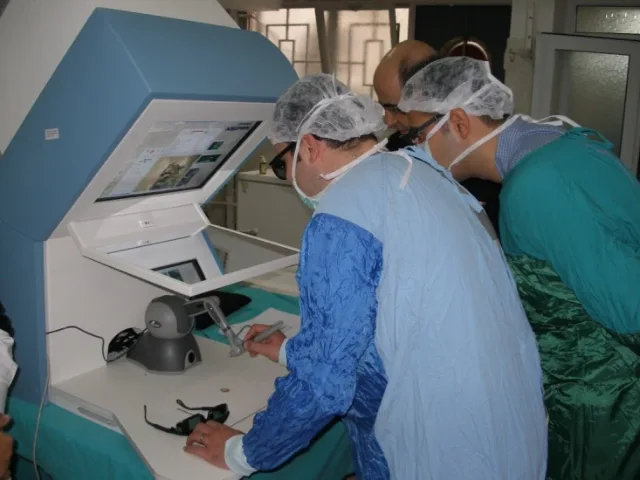
Full Curriculum of the Faculty of Medicine
The course and clerkship plan of the six-year undergraduate medical programme.
See the curriculum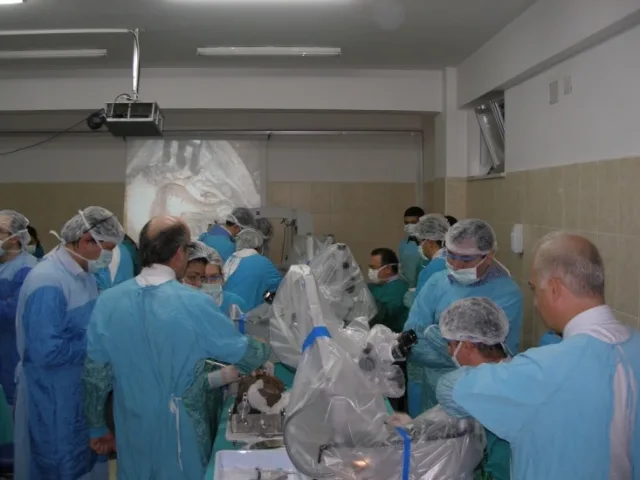
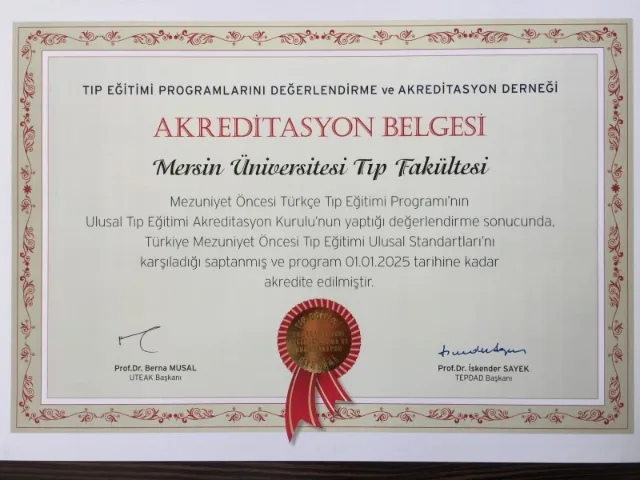
Undergraduate Medical Education Accreditation
Our programme has been accredited three times by TEPDAD; the current accreditation is valid until 2031.
View the accreditation